The lash business stopped being a volume game.
For the past five years, growth came from simple adoption: more people had never had extensions before, more studios opened, and whoever could offer the fastest set at the lowest price filled the chair. That phase is over.
From 2026 through 2030 the category enters a different competition entirely — one decided by refinement, technology, brand credibility and compliance rather than by price. The studios and suppliers that win in this phase will not be the cheapest. They will be the safest, the most professional, the most specific, and the closest to what clients actually want.
Industry estimates put the global lash market at a steady 7–12% compound annual growth rate, with China alone projected to pass the RMB 20 billion mark by 2030 while export volume keeps climbing. The money is still in the category. What has changed is where the money comes from.
Below are the six growth engines with the highest degree of certainty, drawn from global market data, tightening cosmetics regulation in both domestic and export markets, end-consumer behaviour, and supply chain upgrades. If you run a studio, practise as an artist, build a brand, or supply any of the above, this is the map for the next five years.
1. Safety First: From “Can I Get Them?” to “Is It Safe?”
In the next five years, safety will displace speed and style as the first decision factor in lash consumption.
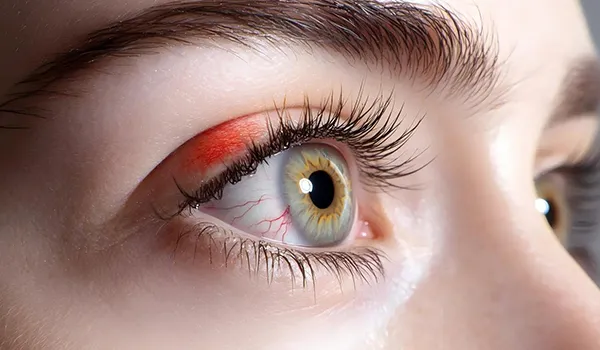
Eye-area health awareness has risen sharply. Consumers now read ingredient lists, ask about formaldehyde, and talk to their optometrist. At the same time, the weaknesses of conventional high-irritation, fast-curing, high-vapour adhesives have become impossible to ignore: redness, stinging, dryness, contact allergy. A large population of sensitive-eye, dry-eye and otherwise fragile clients has quietly decided that lash extensions are not for them.
That abandoned demand is the single largest untapped pool in the category.
On the product side, the mainstream will shift to formaldehyde-free, latex-free, botanical-soothing formulations with balanced chemistry — including low-irritation UV-curing adhesives. On the service side, studios that build a genuine sensitive-eye protocol — patch testing, a documented aftercare routine, a repair-and-recovery step — will separate themselves from the pack almost immediately.
The industry used to compete on “cures in half a second” and “holds like concrete”. It will compete on gentle plus long-lasting. Safety is becoming a premium you can charge for, not a box you tick.
2. Technology: UV Curing Rewrites the Efficiency Standard
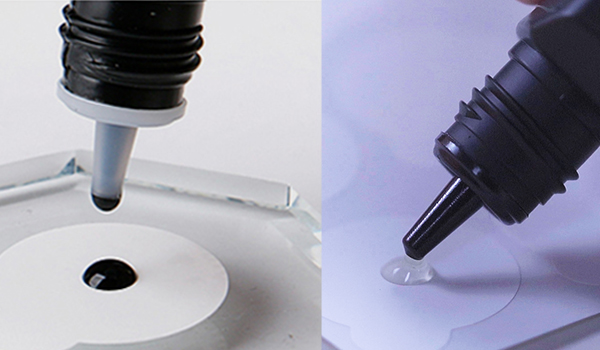
Humidity-cured adhesive has a structural weakness nobody has fully solved: it depends on the room. Temperature, seasonal humidity and regional climate all change the cure, which means inconsistent retention, a higher correction rate, and a result that varies between studios in different cities.
That is a hard problem for anyone trying to build a repeatable service — and UV curing is currently the most credible answer.
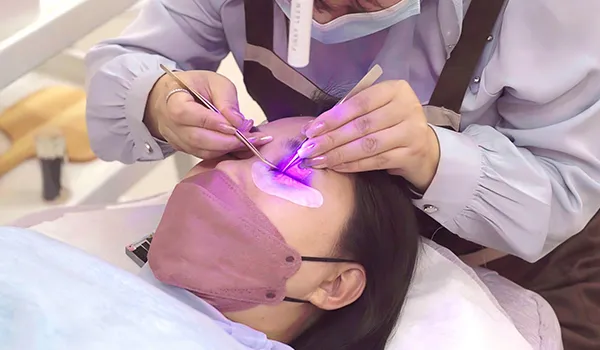
A UV system cures on demand with controlled light rather than waiting on ambient moisture. The practical consequences are what matter: a stable cure regardless of weather, no ongoing off-gassing after placement, reduced slippage and twisting, faster workflow, and a lower correction rate. For the artist, tolerance for error goes up and aftercare problems go down. For the client, the appointment is more comfortable and the set lasts.
The trajectory is the same one already seen in adjacent beauty categories: as equipment cost falls, formulation matures and awareness spreads, a technology that started as a premium differentiator becomes standard infrastructure.
Assume UV moves from “signature service” to “table stakes”. Brands and high-end studios that establish the capability early will define the category standard rather than adopt someone else’s.
3. Segmentation: Stop Selling Styles, Start Solving Faces
Style homogeneity is where margins go to die. YY fans, clover, mega-volume — the catalogue has been reinvented so many times that it no longer differentiates anyone, and price becomes the only remaining lever.
The growth between now and 2030 sits underneath that: specific scenarios, specific people, specific prescriptions.
Clients are no longer asking for “longer and fuller”. They are asking for a set that suits their features, their eye shape, their makeup habit and their actual week — a barely-there everyday set, a clean office set, a photogenic set built for camera, a durable set for humid commutes and the gym. Each is a different service with a different prescription.
Simultaneously the buyer base is widening. Men’s grooming, younger first-time clients, and lower-tier and suburban markets are all expanding, breaking the assumption that lash extensions are one homogeneous female audience.
Studios will not win on having the most styles. They will win on diagnosis, personal prescription and a documented plan for one specific face — which is exactly what justifies a higher ticket and a shorter rebooking cycle.
This is the category’s shift from selling a product to selling judgement and a solution. It is also the mechanism behind the minimalist aesthetic taking over the look of 2026 — a shift we covered separately in 2026 Lash Trends: Why Less Is More Wins.
4. Compliance and Brand: The End of the Unbranded Era
Regulation is tightening on both sides of the trade. Domestic cosmetics filing requirements have hardened, and import review in overseas markets has got stricter at the same time. The result: the era of unregistered, unlabeled, unknown-formula product is closing.
Over the next five years, compliance is not a legal footnote — it is one of the largest commercial openings in the sector.
Ask any serious buyer — a studio sourcing at scale, a wholesaler, an import or cross-border seller — and their shortlist criteria have changed. They now want complete filing credentials, MSDS/SDS documentation, transparent ingredient disclosure, and certifications their own market expects, including vegan and cruelty-free claims they can actually evidence.
Small workshops with anonymous formulas and no traceability will be progressively pushed out. What replaces them is the legitimate private-label route: transparent formulation, stable quality control, a documented process, and a product that can be both filed domestically and exported.
For brand founders, studio owners and cross-border sellers, building a properly documented own-brand line is now a durable profit engine — the only realistic exit from buying at the bottom of a price war and reselling into the same war.
5. New Occasions: Breaking Out of the Treatment Room
Extensions have always been capped by their own delivery model: you must book, travel, lie still for two hours, and rely on a professional. That constraint has limited how large the market could get.
The constraint is dissolving. At-home lash application, adhesive-free self-application and convenient press-on formats are entering a growth phase, driven by younger consumers who want the result without the appointment. These products reach the clients a studio physically cannot: the budget-limited, the schedule-limited, students, frequent travellers, and anyone not yet ready to commit to a full set.
Do not read this as cannibalisation. Read it as a ladder. The at-home buyer is the same person on a night she cannot book; the studio client buys the convenience format between fills. A business that only owns one rung leaves revenue on the table.
The second half of this shift is cross-category. Lash paired with nail, skin treatment and brow or makeup services raises both ticket size and visit frequency, which is how a studio escapes the ceiling of a single-service model.
The strategic move for 2026–2030 is a portfolio: in-chair services for premium outcomes, convenient formats for frequency, bundles for visit value.
6. Supply Chain: Raw Materials and Consistency as the Real Moat
The old supply chain competed on cost. The next one competes on material, formulation, quality control and stability.
Consumer expectations have moved up on every line of the product: adhesive that is low-irritation with a predictable cure; fibres that are soft, fine and convincing rather than shiny and stiff; consumables that are safe and environmentally considerate; packaging that looks like it belongs on a vanity.
Upstream, higher-purity balanced monomers, botanical soothing ingredients, biodegradable materials and advanced synthetic fibres are continuing to displace cheaper substitutes. On the production side, controlled clean-room manufacturing, precise formulation, batch testing and documented consistency are no longer a differentiator — they are the entry requirement.
This is where the gap between suppliers becomes structural. A factory with a proprietary formulation, verified QC and export-grade documentation can serve markets the low-cost workshop simply cannot enter — and can hold a price there.
For anyone choosing a supply partner, the question has changed from “what is your unit price” to “what can you prove”.
Conclusion: The Growth Was Never the Problem. The Mindset Was.
2026–2030 is not a period in which everyone in the lash industry makes money. It is a period in which professionals get paid, compliant operators survive, and innovators break out.
Grinding on price only gets harder every quarter. The six engines are worth tracking precisely because they pull in the same direction: safety, technology, prescription, compliance, accessibility, and manufacturing depth. Studios and brands that reposition along those axes will hold their ground through the reshuffle; those that do not will compete on the only dimension left, and it is the one with no floor.
For lash studios, artists, wholesalers and brand founders, the practical conclusion is short. Adjust the offer, upgrade the product and the service standard, and document both. That is the competitive advantage for the next five years.