The global eyelash extension market is undergoing a decisive aesthetic transformation. For years, salon menus were dominated by uniform density: solid Russian volume fans, hyper-dense strip-lash replications, and heavy, monolithic lash lines. While dense sets still hold a place in dramatic evening aesthetics, high-end clientele and top-tier lash studios are pivoting rapidly toward airy, multi-dimensional, and breathable designs. Often categorized under names like fairy lashes, ethereal wisps, or feather-layered mapping, this emerging styling philosophy prioritizes negative space, deliberate texture, and organic movement over sheer volume.
Achieving a genuine fairy lash set is notoriously difficult when approached through conventional application techniques. Many lash artists encounter frustrating inconsistencies: sets that look sparse and unfinished, fans that cross haphazardly to create visual clutter, or rigid spikes that appear harsh and artificial. The secret to mastering ethereal texture lies in treating the lash line not as a flat canvas, but as a three-dimensional architectural space. By dissecting the natural lash canopy into distinct vertical tiers, professional lash artists can construct reliable, repeatable, and stunning wispy designs that enhance the client’s natural beauty without adding excessive weight.
1. The Aesthetic Shift: Why Solid Volume Is Giving Way to Breathable Texture
Modern beauty consumers are increasingly favoring soft-glam and no-makeup makeup aesthetics that emphasize skin vitality and effortless elegance. Heavy, opaque lash extensions can overpower delicate facial features, cast dark shadows under the eyes, and look unnatural in bright natural lighting. In contrast, fairy lash mapping introduces controlled negative space between lash fans, allowing natural light to filter through the lash line and illuminate the eyes from every angle.
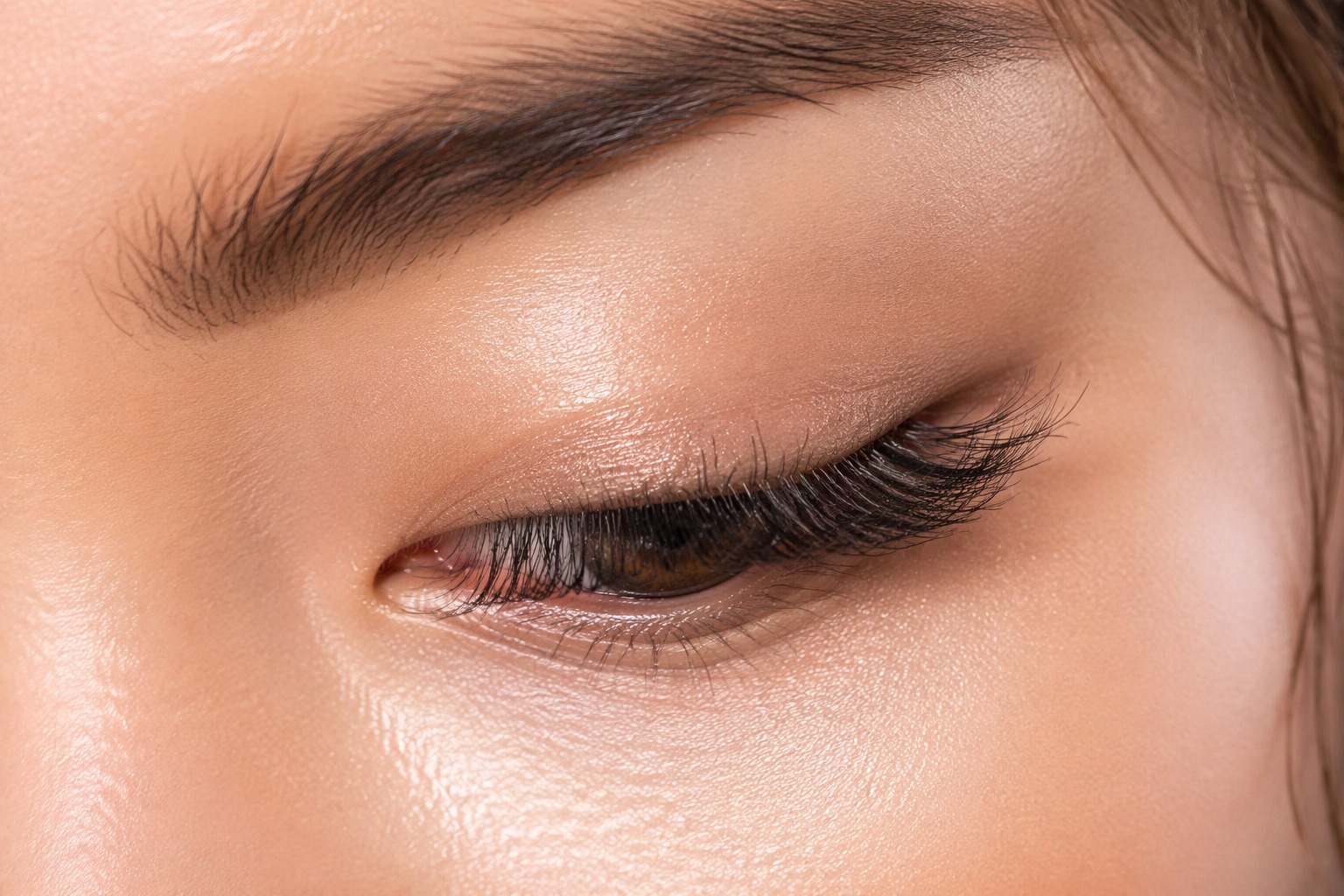
From a visual standpoint, the fairy lash look mimics the natural, varied growth cycle of biological eyelashes while elevating it into high-fashion editorial styling. The set appears clean and understated from a distance, yet reveals intricate, feather-soft dimension upon closer inspection. This versatility makes the look universally flattering for daily corporate wear, minimal makeup routines, camera close-ups, and special evening events.
The shift toward fairy lash styling reflects a broader industry demand for breathable luxury that enhances natural eye contours rather than concealing them beneath opaque synthetic weight.
2. Deconstructing the 3-Tier Layering System: Foundation, Volume, and Light
The biological lash line does not grow in a single neat row; natural eyelashes are arranged in three to five distinct vertical layers along the eyelid margin. Conventional volume techniques often attempt to force all layers into a uniform top-line curve, producing a solid, blunt edge. In contrast, fairy lash mapping leverages these natural anatomical levels to create depth and softness through three specialized tiers.
The three tiers function in continuous synergy: the bottom tier anchors the overall eye shape, the middle tier creates airy body and softness, and the top tier introduces delicate visual highlights. Each tier requires dedicated lash diameters, lengths, and fan geometries to ensure structural balance. When executed correctly, the transitions between layers remain completely fluid, eliminating sharp visual steps while maintaining clear dimensional hierarchy.
Mastering the three-tier framework allows lash professionals to transform natural anatomical layering from a styling challenge into their greatest creative asset.
3. Tier One: The Anchor Base Layer (Structural Contour and Directional Stability)
The base layer, applied primarily to the lower row of natural eyelashes closest to the eyeball, serves as the structural foundation for the entire set. Its primary purpose is to outline the eye contour, establish perfect directional alignment, and prevent the design from appearing hollow or droopy when the client opens their eyes.
To construct this anchor layer, the lash technician applies short-to-medium lengths in uniform, parallel alignment. Rather than covering every available natural lash, the artist maintains moderate spacing, leaving deliberate gaps that will be filled by the upper layers. The mapping follows the natural curvature of the eyelid: softer and shorter at the inner corner, gradually rising through the central pupil zone, and extending slightly toward the outer corner.
A disciplined, lightly spaced base layer provides the necessary structural support to define the eye shape without creating a dark, restrictive liner effect.
4. Tier Two: The Middle Infill Layer (Creating the Airy, Feathery Fluff)
The middle tier represents the artistic heart of the fairy lash architecture, where flat foundation transforms into dimensional fluff. This layer is applied to the middle natural lash rows, strategically bridging the empty spaces left between the base anchor points.
Key application principles for the middle infill layer include:
1.Placement Geometry: Middle fans are placed strictly into the gaps between bottom-layer extensions rather than stacked directly over them, preventing clumped adhesive bases.
2.Single-Step Length Increment: The middle-layer extensions are selected exactly one millimeter longer than the corresponding bottom anchors beneath them, creating subtle micro-staggering.
3.Low-Density Distribution: The artist utilizes ultra-fine, wide-spread 2D or 3D fans with minimal adhesive, preserving an open, breathable lattice across the lash line.
By staggering delicate fans into the negative spaces of the base layer, the middle tier generates a soft, feathery texture that gives the set its signature airy volume.
5. Tier Three: The Accent Peak Layer (Subtle Highlighting and Ethereal Spikes)
The top tier, placed along the uppermost row of natural lashes, introduces focal points and delicate visual highlights. Unlike dense, heavy Kim-K style spikes that command aggressive attention, fairy accents are whisper-thin, ultra-tapered tips designed to catch the light during blinking and eye movement.
These accent peaks are crafted using ultra-fine lashes, typically 0.03mm or 0.05mm closed fans or delicate single extensions, positioned exclusively over key focal zones such as the arch above the iris and the outer third of the eye. The length of these peaks is stepped up by exactly one additional millimeter above the middle layer. Because they are applied sparingly and with microscopic precision, they create a soft, glistening halo effect rather than a harsh, serrated comb pattern.
Sparse, micro-diameter top-layer peaks deliver a luminous, ethereal highlight that catches natural light without compromising the set’s weightless feel.
6. The Master Length Progression Formula: Seamless Single-Millimeter Steps
The most critical technical rule in fairy lash mapping is the single-millimeter length progression principle. Many technicians make the mistake of creating drastic length jumps, such as pairing an 8mm base directly with a 13mm spike. These violent contrasts look disjointed, cause premature drooping of heavy spikes, and destroy the organic harmony of the set.
A universally flattering mapping blueprint for natural almond and balanced eye shapes follows this balanced progression:
4.Inner Canthus Transition (Inner Corner): 8mm to 9mm base anchors with 9mm middle infills, keeping the delicate inner eye bright, comfortable, and free from heavy downward pressure.
5.Central Pupil Zone (Mid-Eye): 10mm base anchors with 11mm middle infills, expanding visual vertical height directly over the iris to open the eye.
6.Outer Canthus Contour (Outer Corner): 11mm base anchors with 12mm middle infills, softly tapering and elongating the outer eye line.
7.Ethereal Accent Highlights: Micro-spikes of 12mm placed selectively across the mid-eye and outer-mid focal points.
Restricting length transitions to precise single-millimeter increments ensures a seamless, organic visual flow with zero harsh steps or awkward gaps.
7. The Three Fatal Mapping Errors That Ruin Ethereal Lash Sets
Even experienced volume artists frequently stumble when attempting textured fairy sets due to entrenched habits from solid volume lashing. Diagnosing and correcting these three common technical errors is essential for consistent studio results.
The first major error is erratic length jumping across adjacent lash groups. Skipping two or three sizes within the same zone produces a chaotic, unkempt appearance that clients perceive as poor workmanship rather than intentional texture. The remedy is strict adherence to adjacent single-millimeter grading.
The second mistake is over-saturation and the elimination of negative space. When artists panic over visible gaps and attempt 100% full coverage with wide fans, the delicate airy texture collapses into a standard dense volume set. The key is trusting the negative space to provide depth.
The third mistake is uniform, monotonous density across the entire eye frame. Applying identical fan weights and lengths from the inner to outer corner results in a flat, heavy mask that dulls the client’s gaze. The artist must emphasize the central or outer focal zones while keeping the boundaries feather-light.
Avoiding erratic length jumps, excessive lash coverage, and flat horizontal density is essential to maintaining the delicate, sophisticated balance of fairy lash styling.
8. Tailoring the Architecture: Customizing Layer Heights for Different Eye Anatomies
No single lash map fits every client. A master lash technician must evaluate ocular anatomy, lid overhang, brow spacing, and natural lash growth angle before selecting tier proportions.
For hooded eyelids, deep-set eyes, and monolids, excess upper-layer length can press against the fleshy brow bone, causing discomfort and pushing lashes downward. For these eye types, the artist should shorten the top accent peaks, reduce the number of spikes, and concentrate on a fluffy, open middle layer using high-lift curls like CC or D to visually lift the lid.
For round, prominent eyes, excessive mid-eye length can create an startled, exaggerated appearance. The artist should reduce central peak height and gradually extend the outer middle layer toward the outer corner, softly elongating the horizontal eye profile into an elegant cat-eye silhouette.
For downturned or mature eyes, extending length to the extreme outer corner accentuates downward droop. The optimal approach is to shift the highest accent peaks inward toward the outer edge of the pupil while sharply stepping down outer corner lengths to 9mm or 10mm, providing an instant visual facelift.
Customizing tier lengths and curl distributions according to individual ocular anatomy ensures that fairy lash mapping enhances facial harmony rather than accentuating anatomical imbalances.
9. Material Selection and Chemistry: Diameters, Fan Geometry, and Micro-Bonding
The physical execution of weightless fairy sets requires deliberate choices in synthetic fiber materials, adhesive formulation, and curing dynamics. Because fairy sets rely on open spacing and distinct lash tips, any heavy adhesive ball or coarse fiber diameter becomes immediately visible.
Professional material specifications for optimal fairy lash sets include:
8.Fiber Selection: Premium Korean PBT synthetic fibers with matte, deep-black or soft cocoa-brown finishes. Diameters must range strictly between 0.03mm and 0.05mm for middle fluff fans and accent spikes, with 0.07mm reserved exclusively for single-lash base anchors.
9.Fan Geometry: Middle-layer fans must feature short, narrow stems with wide, symmetrical tip blossoms to maximize airy coverage while keeping the adhesive contact zone feather-light.
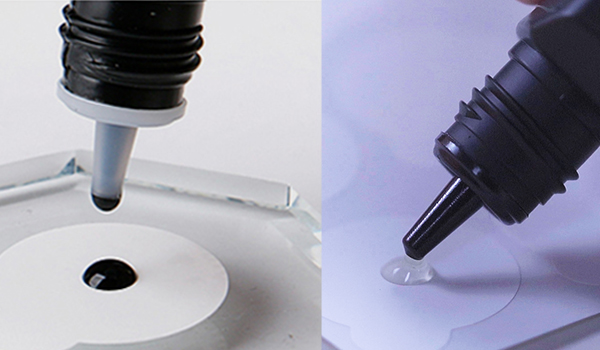
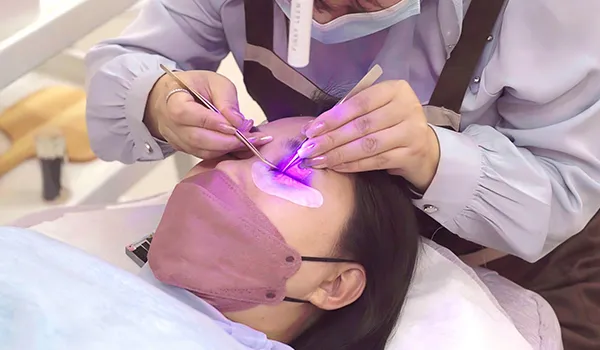
10.Micro-Bonding Adhesive Control: Utilizing an advanced, ultra-fast curing adhesive with low viscosity prevents adhesive climbing and keeps fan stems micro-slim. Light-cured LED/UV lash systems provide a significant advantage here, freezing the staggered fan heights instantly in 0.3 to 0.5 seconds without allowing neighboring fibers to merge or twist.
Combining ultra-fine 0.03mm to 0.05mm matte fibers with micro-drop adhesive control prevents structural bulk and guarantees crisp, long-lasting fan separation.
10. The Salon Business Case: Turning High-Concept Mapping into Premium Revenue
Integrating specialized fairy and wispy mapping into a salon service menu offers substantial commercial advantages beyond artistic satisfaction. As standard classic and volume sets become commoditized across the beauty market, bespoke textured mapping positions a studio as a high-end trendsetter.
Textured, customized sets command premium pricing, typically 25% to 40% higher than standard volume sets, because clients recognize the customized artistry and individualized consultation required. Furthermore, because fairy sets distribute physical weight across micro-diameters and embrace organic negative space, client lash health is preserved, leading to significantly higher long-term retention and shorter infill appointment times.
By marketing fairy lash mapping through crisp, well-lit photography that highlights the delicate, feathery tips against natural skin tones, salons can attract discerning clients seeking refined, modern luxury over generic volume.
Positioning layered fairy lash mapping as a signature premium service elevates salon brand prestige, enhances client loyalty, and drives substantial service margin growth.