The last fan is placed. The bond is already set — no sharp smell rising off the tray, no client blinking through the final row, just a clean, even line in the mirror. For the salons that work with it, this is not a demonstration. It is a Tuesday.
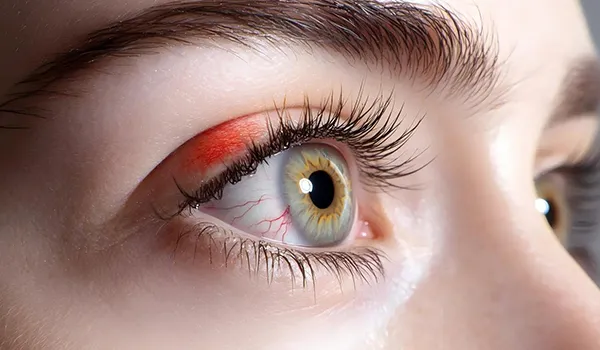
The pain points in lash adhesive are old and well documented. Irritation makes clients water and blink. Slow cure eats appointment time. A single colour option limits what an artist can do with a client’s natural lash. Each one looks small in isolation. Together they decide whether an artist enjoys a set and whether the client books again.
So what changes when an adhesive is engineered against those three problems rather than around them?
01 — A Lower-Irritation Standard
Conventional lash adhesive causes discomfort because of what evaporates off it. Pinky Leem’s UV adhesive addresses that at the formulation level rather than by simply reducing actives.
The formula is designed for low volatility, which cuts down the release of irritating vapour at the lash line. According to the brand, this was achieved by optimising the molecular structure to lower volatile organic compound content while holding bond strength — a trade that is harder than it sounds, because those two properties normally move together.
Two further decisions drive most of the comfort difference:
•pH is tuned closer to the natural pH of human tears. That biocompatibility approach reduces the risk of ocular discomfort, including in the moments when adhesive contacts the lid or the surrounding skin.
•The formula excludes formaldehyde and acrylic acid, and is submitted to safety testing. *(see the verification table — this line needs your exact restricted-substance list before publishing)*
Artists’ reported experience matches the chemistry: fewer watery eyes, less mid-set blinking, and a smoother run through the appointment. For sensitive-eyed clients — the population that quietly stopped buying extensions — this is usually the difference between one attempt and a standing appointment.
02 — Cure Speed, and the Economics Behind It
Cure time is not a spec-sheet number. It is chair time, and chair time is revenue.
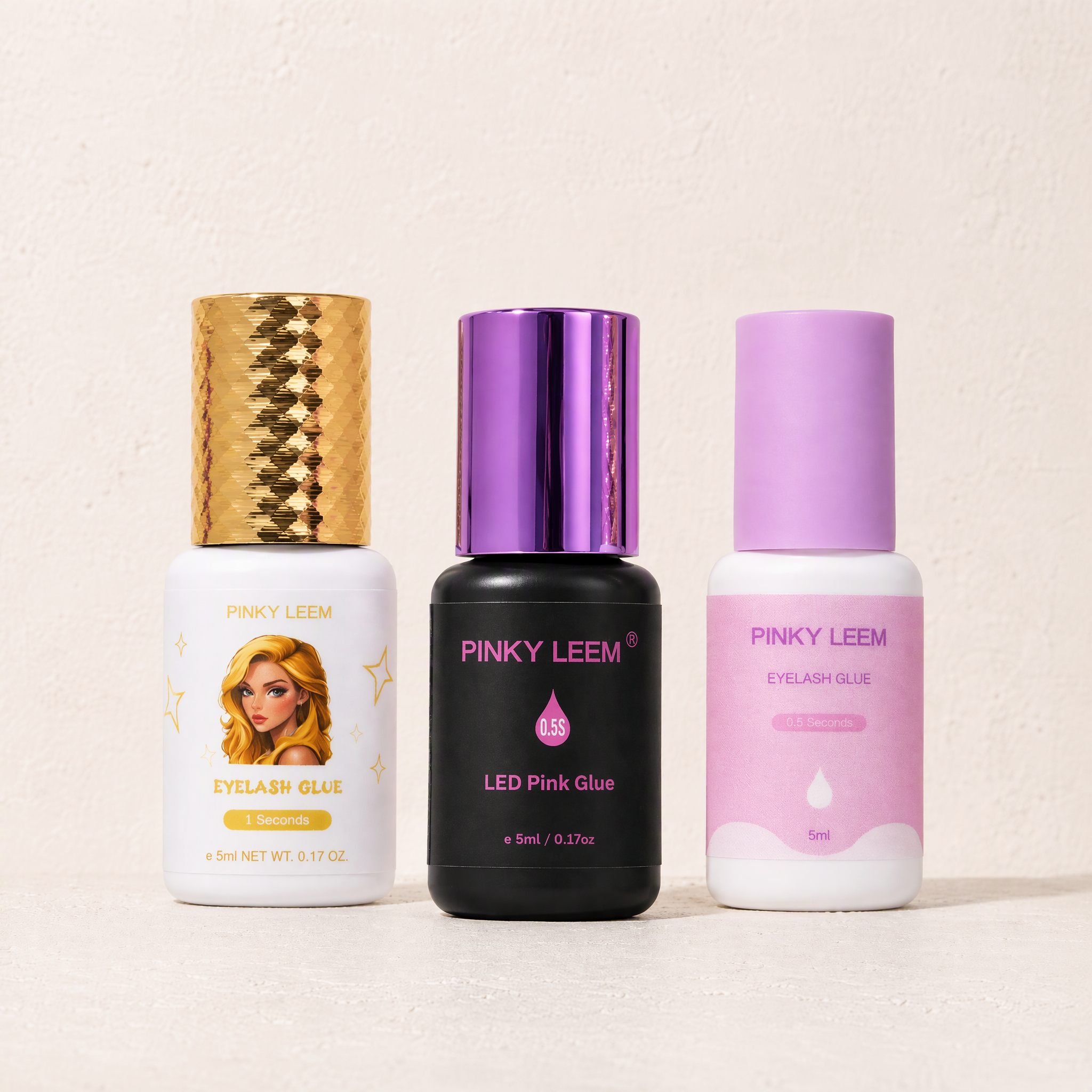
Typical lash adhesive sets in 2–3 seconds. Pinky Leem’s optimised photoinitiator system shortens that to 0.3–1 second, used with the matching UV lamp at the recommended distance. Across a full set those fractions compound: enough to take one more client through the day, or to spend the recovered minutes on detailing instead of waiting.
The second-order benefit matters more than the headline number. When cure is instant and on command, placement control improves. An artist no longer races a bond that is starting to grab, so the extension can be positioned deliberately — correct angle, correct isolation, correct distance from the lid — and then fixed exactly there.
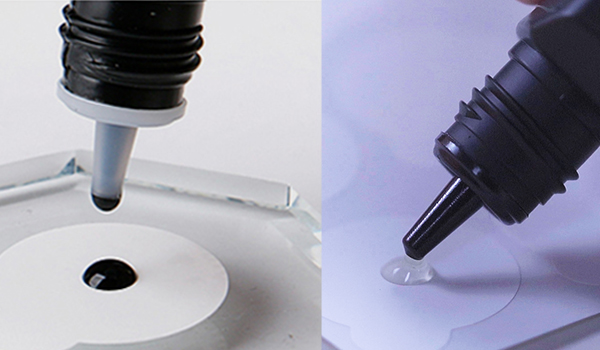
Rapid curing also reduces stringing, the fine threads of adhesive that form during placement and leave visible residue at the base of a fan. The brand addresses this through the rheology of the adhesive: it holds an ideal viscosity through dispensing and application, then sets without drawing threads. That is why the finished bases photograph clean.
03 — Five Shades, and Why Each One Exists
For most of the category’s history, clear was effectively the only option, which quietly narrowed what a lash design could be.
Pinky Leem releases the adhesive in five shades: clear, black, brown, purple and pink. The engineering cost of doing that is easy to underestimate. Introducing pigment into a system whose cure speed and bond strength were tuned without it means re-balancing both. Each shade has to earn its colour without buying it at the expense of performance.
The palette is functional before it is decorative:
Clear — the invisible bond. Where natural lashes are sparse or very fine, a dark adhesive leaves a visible dot at every base. Clear disappears, so the density increase reads as the client’s own lash. This is the default for the bare-faced, no-makeup client and for anyone whose brief is “nobody should know”.
Black — the highest-contrast natural match. For clients with dark hair and dark natural lashes, black makes the bond line read as continuous with the lash itself, which is what produces the dense-looking root line in the soft Japanese natural style.
Brown — the low-contrast option. Fair, ash and light-brown hair, grey blending, first-time clients who are worried about looking “done”, and any client who wants visible reinforcement without visible makeup. This is the shade that opened the men’s client base — see section 05.
Purple and pink — the creative set. Not hidden bonds but deliberate ones, for editorial work, fashion and photo shoots where the lash line is part of the design rather than something to conceal.
Five shades changes what an artist can promise. Colour becomes a per-client decision alongside curl, diameter and length — chosen for eye shape, skin tone, hair colour and the finished look the client actually wants.
04 — Retention: What 6–8 Weeks Means in Practice
The adhesive is engineered to hold 6–8 weeks, matched to the natural lash growth cycle rather than to the failure point of the bond.
Two things make that number honest rather than aspirational.
First, extensions do not fall out on a schedule — natural lashes shed on one. A retention figure describes how long a correctly bonded extension stays on through that cycle. It assumes the set is complemented by a fill every 2–3 weeks, which is standard practice in any professional studio and is what keeps a set looking full rather than patchy.
Second, retention is a client-side variable as much as a product one. Natural oil levels, skincare actives near the eye, saunas, pool chlorine, oil-based makeup removers and mechanical friction from sleeping position all shorten it. This is why a real specification includes aftercare — and why a salon quoting 6–8 weeks without aftercare guidance is quoting a number it cannot control.
What the formulation does control is the bond itself: a cure that completes fully at placement, and a base that stays flexible with the natural lash instead of going rigid and brittle as the cycle runs.
05 — A Palette That Found a New Client Base
The surprise was demographic.
Clear and brown — the two lowest-contrast shades — began attracting male clients that the category had barely addressed. The reason is straightforward once you have seen the brief these clients bring: they want the reinforcement and the tidy, groomed line, and they do not want a made-up look. A brown bond on a light natural lash delivers the first without announcing the second.
Tinted options also widened the creative side of the service. Purple and pink bonds turn the lash line into a design element for editorial and fashion work, which is a different brief and a different price point from the everyday natural set.
06 — Clean Formulation as a Purchase Requirement
The formula is vegan and cruelty-free: no animal-derived ingredients in the formulation, and no animal testing in the formula or production process.
That matters commercially rather than just ethically. In the US and European markets, vegan and cruelty-free status has moved from a nice-to-have badge into a shortlisting criterion for a growing share of salon owners and distributors — the same compliance-driven buying behaviour this category has been moving toward for several years. For buyers building a private-label line, the formulation status also determines what they are allowed to claim on their own packaging.
If you are sourcing for export or for a branded range, ask for the supporting documentation before you print a claim. *(Internal note: state the certifying body and certificate reference on the product page once you have it. Do not print a certification logo without one — see table below.)*
07 — System Effect: Adhesive and Lamp Together
The adhesive’s performance is designed against a specific partner: a matching UV curing device.
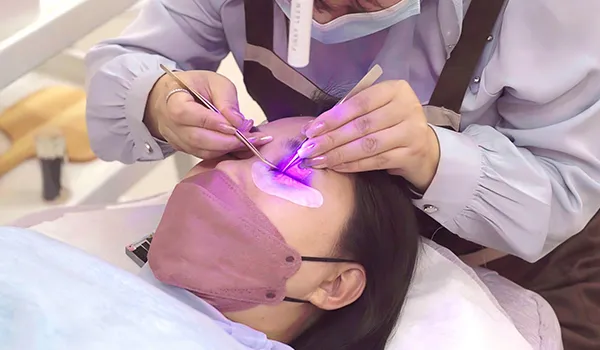
The photoreactive properties of the glue and the wavelength of the lamp are matched to each other, so the fastest possible cure is reached at the lowest UV exposure. That pairing has a second consequence — less time the client’s eyes spend under the light.
In practice, the full system (adhesive plus curing lamp) is where the stability shows up: cure speed and final strength behave predictably from set to set. In a commercial environment, predictability is worth more than a peak figure. It is what lets a studio write a service standard, train to it, and guarantee it.
08 — Technique: Where the Specification Becomes a Finished Set
A formulation only performs through an artist’s hands. On a UV system the workflow differences are concrete:
•Work under controlled light, not ambient conditions. The cure is triggered by the lamp, not by room humidity, so the working window stays the same in winter, in summer and in a basement studio.
•Dispense thin, and dispense fresh. A small droplet on a fresh surface keeps viscosity predictable; a droplet left to sit builds a skin and changes how the bond forms.
•Place first, cure second. Because the adhesive does not grab on its own, you can seat the extension in the exact position, check the angle and the isolation, and only then trigger the cure. That order is the whole advantage of the system.
•Keep the light on the bond, not on the eye. Direct the head lamp or dual-head lamp at the working line where the extension meets the natural lash.
•Finish by checking the base, not the tip. Clean bases with no stringing and no visible glue point are what make a set look natural at conversation distance and in photographs.
The visible result of that workflow is the sentence every artist wants from a client: *”I can’t tell you did anything.”*
09 — Market Response
Since its release, the adhesive has moved into salon service-upgrade plans, according to the brand.
The number salons care about: repeat client rate rose by approximately 18%, attributed both to improved retention of the finished set and to an application experience clients do not need to endure. Clients who had given up on extensions because of sensitivity are, in reported cases, returning to the category.
Which points back to the original insight: the category’s next phase is a balance of safety, efficiency and personalisation, and technical progress is only worth anything if it is anchored in what the end user actually experiences.
The Point
Lashes that hold their curl for six to eight weeks. Clean bases with no visible residue. Colour that disappears into the natural lash — or colour that deliberately does not.
Technology is only finished when it lands on a person. In a field where the detail *is* the product, an adhesive that stops irritating, cures in under a second, holds through a full growth cycle and comes in five shades does not simply remove old complaints. It opens room for lash work that is genuinely tailored to the client in the chair.