From Eyelash Extension Salon to Own Glue Brand: A Practical Guide for Beauty Industry Professionals Transforming into Product Businesses, Turning Technical Reputation into Sustainable Income
Have you ever felt this way after running a beauty salon for years: Working long hours taking eyelash extension orders, leaving you exhausted and with a sore back, yet your income is limited by your workstation and operating hours; loyal customers constantly ask, “Your eyelash extension glue is so good, it’s non-irritating and strong, can I buy it separately?”, but you can only recommend other products, watching helplessly as the brand earns the profits; seeing competitors profiting from both online and offline sales with their own eyelash extension products, but not knowing where to start.
Actually, transforming an eyelash extension salon into a private-label eyelash extension glue brand is not an “unattainable crossover,” but rather an excellent path to transform your years of experience in eyelash extension techniques, customer trust, and industry resources into “passive income.” As a professional deeply involved in the eyelash extension field, you understand best the sensitive areas around your customers’ eyes, and you know best which eyelash extension glues are strong and non-irritating—this is your core advantage in creating your own eyelash extension glue brand.
Today, I’ll share a complete guide from “service-oriented store” to “brand-oriented merchant,” helping even beginners follow along step-by-step.
I. First, clarify: Why are you suited to create your own brand? (More important than blindly starting) Many eyelash extension practitioners worry that “I don’t understand product development, and creating an eyelash glue brand will be unprofitable.” However, your eyelash extension store itself is the “natural breeding ground” for your own brand:
Inventory of Customer Trust: Long-term customers have had eyelash extensions with you multiple times, developing a natural trust in your techniques and products. They know the glue you choose is safe and strong—this is the “initial traffic” that a new brand can’t buy even with hundreds of thousands in advertising fees;
Precise Product Needs: You deal with customers with different skin types around the eyes every day, clearly understanding what irritating ingredients sensitive skin customers fear and what long-term effects they require. Knowing what kind of conditioning adhesive clients need and what easy-to-use adhesive novice eyelash technicians prefer allows for precise product targeting, avoiding “reinventing the wheel.” Enhanced experiential learning: Your eyelash extension shop is the best “product experience store.” Customers can personally experience the adhesive’s low irritation, quick drying, and durability during the application process, which is far more persuasive than simple online descriptions, significantly reducing conversion rates. Accessible industry resources: Years of experience in the eyelash extension industry mean you’re likely familiar with the product supply chain, eyelash training, and eyelash consumables, saving you a lot of trouble during your transformation.
Simply put: While others build trust from scratch, you’re monetizing your existing “reputation assets”—that’s your core competitiveness.
II. The First Step in Transformation: 3 Core Preparations to Avoid Blindly Falling into Pitfalls
Having an idea doesn’t mean you can just start. Making these 3 preparations in the early stages can save you 50% of your time and costs:
1. Positioning: First, lock in a “small but beautiful” niche market
Newcomers should never start by making “all-category eyelash products” (such as making glue, eyelash extensions, and glue remover all at once), as this easily distracts you. We recommend starting with your strongest application scenarios and addressing your core customer pain points, focusing on eyelash extension glue as the core product and identifying specific needs:
If your salon specializes in “eyelash extensions for sensitive skin”: Develop a hypoallergenic formula eyelash extension glue, labeled “formaldehyde-free,” precisely targeting customers with sensitive skin around the eyes prone to redness and tearing.
If your focus is on “long-lasting, durable extensions”: Develop an eyelash extension glue that cures quickly and lasts 6-8 weeks, targeting working women who frequently travel and don’t have time for frequent touch-ups.
If your focus is on “training/supplying novice eyelash technicians”: Develop an easy-to-use, non-overflowing, beginner-friendly eyelash extension glue, along with tutorials, to meet the needs of novice eyelash technicians or newly opened eyelash salons in the area.
Core principle: First, serve your most familiar customer base well, thoroughly penetrate your niche market, and then consider expanding your product range.
2. Compliance: Complete documentation is the bottom line to avoid penalties later. Eyelash extension glue is a special cosmetic product, making compliance paramount. It’s crucial to obtain all necessary documentation upfront to avoid product removal due to compliance issues:
Basic Qualifications: Register a company (sole proprietorships are acceptable, but a company entity is more beneficial for future development); obtain a “Cosmetic Filing Certificate” from the Food and Drug Administration (eyelash extension glue is considered a general cosmetic, requiring only filing, no complex approval process); if planning to engage in foreign trade, CPNP filing is also necessary;
Product Testing: Engage a third-party testing agency to conduct safety testing, focusing on formaldehyde, irritation levels, etc., and obtain a test report; it’s also recommended to conduct a “skin irritation test” to ensure safety around the eyes and avoid allergic reactions;
Packaging Labeling: The packaging must clearly indicate the product name, ingredient list, manufacturer, production date, shelf life, filing number, and instructions for use (e.g., “Avoid contact with eyes,” “Store in a cool place”); it’s also recommended to additionally highlight key selling points such as “hypoallergenic formula” and “curing time.”
Reminder: If you’re outsourcing production, make sure the manufacturer has a “Cosmetic Production License” and experience in producing eyelash extension glue. Avoid working with unlicensed workshops that may result in substandard product quality.
3. Supply Chain: Newcomers Should Prioritize “Asset-Light OEM Manufacturing”
For newcomers transitioning to eyelash extension salons, building their own factory is too costly (often hundreds of thousands of yuan) and risky. The safest approach is to “partner with a professional eyelash extension glue OEM manufacturer”: How to find a reliable OEM manufacturer? You can find OEM manufacturers through beauty industry exhibitions, eyelash extension industry communities, and peer recommendations. Prioritize manufacturers with over 5 years of experience in producing eyelash extension products and those offering “one-stop service” (from formula development and packaging design to production and delivery) (e.g., Faster Technology Service (Shenzhen) Co., Ltd. is a professional eyelash extension glue manufacturer). Carefully review past glue samples from the manufacturer, testing key indicators such as curing speed, odor, and adhesion. Important considerations for cooperation: Have customers try 3-5 different glue formulas in their stores (for at least one month, collecting customer feedback on odor, adhesion, and irritation) to confirm effectiveness and stability before cooperating. Sign a formal contract clearly defining formula confidentiality, quality standards, delivery time, and after-sales responsibility. Newcomers can start with small-batch production (e.g., 50/100 bottles) to avoid inventory buildup.
III. Core Transformation Strategy: 4 Steps to Build Your Own Eyelash Extension Glue Brand and Turn Reputation into Sales
After completing the initial preparations, you can move on to the brand building and sales implementation phase. The core is to “transform the reputation of your eyelash extension salon into trust in your own glue”:
Step 1: Build a Memorable Brand Image
A brand image isn’t about being “the more high-end the better,” but about “making customers remember you”:
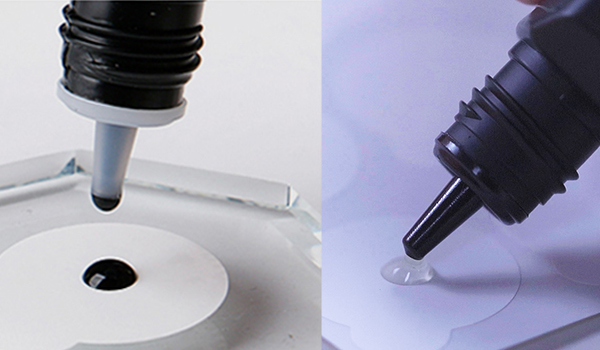
Brand Name: It can be related to your eyelash extension salon’s name (e.g., “XX Eyelash Extensions” leading to “XX Eyelash Secret Glue”), or directly highlight the product’s selling points (e.g., “Sensitive Skin Eyelash Glue,” “Long-Lasting Eyelash Adhesive”), simple, easy to remember, and relevant to the eyelash extension experience. That’s it; Packaging Design: Tailor the design to your target customer’s aesthetic (e.g., younger customers prefer a clean and simple look, while mature customers prefer a high-quality feel), emphasizing a “leak-proof design” (eyelash extension glue is prone to spillage, so a leak-proof cap is crucial); Choose an opaque black bottle to prevent direct sunlight from causing the glue to harden prematurely;
Core Selling Points: Use “customer language” to highlight key selling points. For example, instead of saying “hypoallergenic formula,” say “virtually odorless, won’t cause tears on sensitive skin”; instead of saying “fast-curing,” say “positions in 3 seconds after application, doubling the efficiency”; instead of saying “high adhesion,” say “6-8 weeks of lasting hold, no need for frequent touch-ups.”
Step Two: Focus on “Experiential Selling” at the Beauty Salon
Your beauty salon is the “first battleground” for your own brand. Integrate your products into daily care to make them naturally accepted by customers:
**Integration into Treatments:** When performing eyelash extensions, proactively introduce the product, saying, “Today we’re using our own brand of glue, specially developed for sensitive skin. It’s almost odorless, and the adhesion is strong. Many of our regular customers want to take a bottle home for touch-ups or recommend it to friends who own eyelash salons,” allowing customers to experience the effects firsthand.
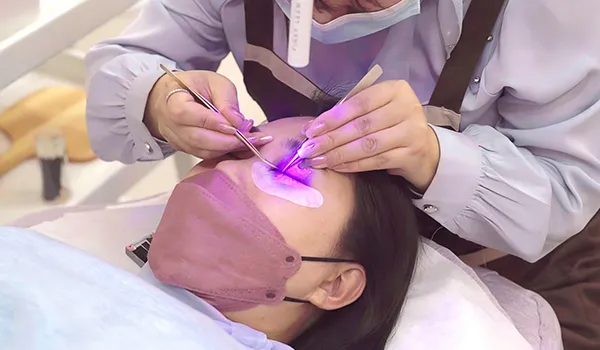
**Offering Trial Packs:** Give customers a 5ml/10ml trial pack of glue (with a small brush) after their extension treatment, reminding them, “If a few eyelashes fall out at home, you can use this small bottle of glue to touch them up. Remember to cure it with a UV lamp for 3 seconds after application. Contact me anytime if you have any questions,” lowering the barrier for customers to try it.
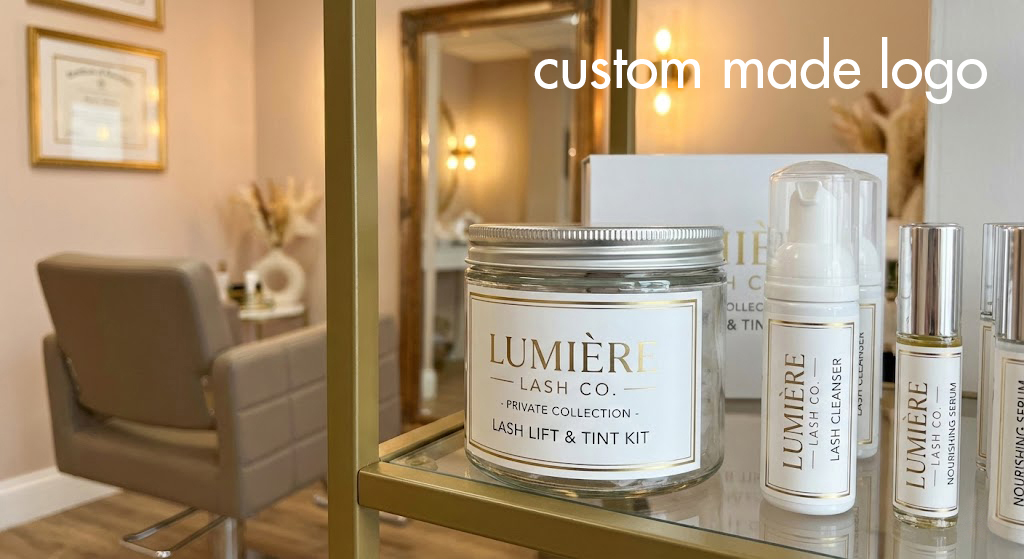
**Store Display:** Place product display racks at the front desk and outside the treatment rooms, displaying before-and-after photos and customer reviews to create a “hot-selling” atmosphere. Store Display: Place glue display racks at the front desk and entrance to the grafting room, displaying customer feedback (e.g., “I didn’t tear up after using this glue,” “It’s still very strong after 7 weeks”) and photocopies of glue testing reports to create a “safe and reliable” atmosphere; also display accompanying UV lamps, grafting tweezers, and other tools for customers to purchase as a set.
Step 3: Activate Existing Customers and Achieve Viral Marketing
Existing customers are your core sales force. Do these two things to get them to actively promote your products:
Introduce “Referral Program” incentives: For example, “Existing customers who refer a new customer to purchase our products will receive a free treatment and a product trial pack.” The new customer’s first purchase will enjoy a 20% discount. This win-win approach greatly increases the enthusiasm of existing customers to promote the product.
Introduce “Referral Program” incentives: For example, “Existing customers who refer a new customer to purchase our eyelash extension glue will receive a free eyelash extension treatment and a glue trial pack.” The new customer’s first purchase will enjoy a 20% discount. If the referred customer is a fellow eyelash salon making a bulk purchase, an additional 10 trial packs will be given. This win-win approach greatly increases the enthusiasm of existing customers to promote the product.
Build a customer community: Invite customers who have purchased your products into a community. Share skincare knowledge and product usage tips regularly, and offer exclusive community benefits (such as limited-time discounts and buy-one-get-one-free offers) to enhance customer loyalty. Simultaneously, encourage customers to share their experiences within the community, creating viral word-of-mouth marketing.
• Build a customer community: Invite customers who have purchased the glue (especially those in the same industry) into the community. Regularly share eyelash extension techniques, glue storage methods (e.g., “seal after opening and avoid direct sunlight”), and precautions for eyelash touch-ups. Offer exclusive community benefits periodically (e.g., limited-time discounts, free extension pads with glue purchases) to enhance customer loyalty. Encourage customers to share their experiences within the community, generating positive word-of-mouth.
Step 4: Online and Offline Integration to Expand Sales Boundaries
Don’t limit yourself to in-store sales. Integrating online and offline channels can help your brand go further:
Online Channels: Open accounts on TikTok, YouTube, and Instagram to upload details about your glue (focusing on videos of the glue application process, before-and-after photos of customer eyelashes, and glue odor tests). Utilize videos for promotion (e.g., sharing case studies of clients who didn’t experience tearing during the entire eyelash extension process using our hypoallergenic glue).
Offline Expansion: Partner with nearby nail salons, wellness centers, and beauty parlors to have them resell your eyelash extension glue (offering a reasonable profit-sharing ratio). Leverage competitors’ channels to expand sales. You can also participate in local beauty salons and eyelash extension skill competitions, demonstrating your glue on-site and giving away samples to attract new customers and competitors.
IV. Transformation Pitfalls: 5 Common Issues to Avoid in Advance
Many beauty professionals fail to transform their businesses, not because they went in the wrong direction, but because they fell into these pitfalls. Avoiding these pitfalls in advance can save you a lot of trouble:
Pitfall 1: Blindly Pursuing “High-End”: Newcomers who set high prices and create luxurious packaging from the start often experience low customer acceptance and inventory buildup. It is recommended that initial pricing be close to the market price of similar low-allergen adhesives, using “effectiveness (low irritation, strong adhesion)” to attract customers;
Pitfall 2: Neglecting product quality: In order to reduce costs, choosing small workshops for processing results in adhesives with pungent odors, slow curing, allergies, and poor adhesion. This not only damages the brand reputation but may also lead to customer complaints and even disputes. Remember: Eyelash extension adhesive comes into direct contact with the eye area; quality is the lifeline of the brand;
Pitfall 3: Neglecting after-sales service: Failure to promptly respond to customer questions (such as “how to preserve it longer” or “what to do if too much adhesive is applied”) or discomfort after use leads to customer loss. It is recommended to establish a comprehensive after-sales system, such as dedicated personnel to answer questions, providing usage tutorial videos, and unconditional returns and exchanges for quality issues;
Pitfall 4: Over-reliance on physical stores: Relying solely on physical store sales and neglecting online promotion results in consistently low sales. It’s important to understand that online platforms break geographical limitations, allowing your products to reach a wider audience.
* **Pitfall 5:** Rushing to expand product categories: Launching multiple products before a single product has stabilized leads to scattered efforts and poor performance across all products. It’s recommended to perfect one product first, creating a “blockbuster,” before considering expanding product categories.
* **V. In Conclusion:** Transformation isn’t about abandoning the past, but about upgrading the future. Moving from an eyelash extension salon to your own glue brand doesn’t mean giving up your years-old service business. It means adding a “sustainably profitable track” to your existing services. When your customers use your glue for easy eyelash extensions at home, or when your competitors use your glue to serve more customers, they will not only rely more on your technology and products but also actively help promote you.
The transformation process may encounter difficulties (such as supply chain integration, glue formula adjustments, and unfamiliarity with online promotion), but remember: your years of experience in eyelash extension techniques and customer trust are advantages that others don’t have. Start with small-batch trial production and provide excellent service to existing customers, gradually accumulating experience. Your glue brand will surely grow stronger over time. Finally, I want to tell you: the future of the eyelash extension industry will definitely be a dual-driven model of “technical services + proprietary products”. Start taking action now and turn your eyelash extension expertise and customer reputation into a continuously monetizable brand asset—you have far more potential than you imagine.