Is your UV eyelash extension falling out? 3 key points: Choose the right glue + control humidity + apply sufficient lamp light for maximum lasting power of 2 months!
Many eyelash technicians and beauty enthusiasts have encountered this frustrating situation: newly applied UV eyelash extensions start to fall out sporadically within a week, leaving patches at the outer corners of the eyes and sparse lower lashes. This not only affects appearance but also requires time and money for touch-ups.
Actually, the rapid falling out of UV eyelash extensions isn’t simply due to “poor glue quality.” It’s mostly about not mastering the three core aspects: glue selection, humidity control, and lamp application. Today, we’ll break down these three key issues and teach you how to avoid pitfalls, ensuring your eyelash extensions stay put for a full 2 months!
I. The First Step Was Wrong: Choosing the Wrong Glue Makes All the Care Ineffective
Many people think, “All UV glues are the same, just buy any bottle,” but in reality, different glues have vastly different “suitable scenarios” and “curing characteristics.” Choosing the wrong one will directly reduce the durability.
1. Check the “UV Response Speed”
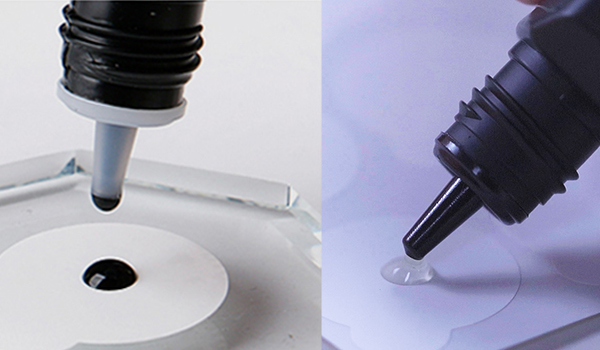
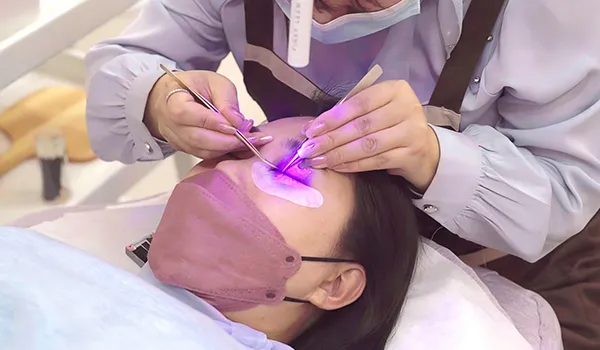
UV glue cures using ultraviolet light. Glue with a slow response speed will start to “flow” after being applied to the eyelashes before curing, not only sticking to the skin around the eyes but also causing uneven glue distribution and poor adhesion. It is recommended to choose a specific professional UV glue, such as our UV grafting glue. After squeezing the glue onto the eyelashes, use tweezers to align the false eyelashes with your natural eyelashes. Cure for 3 seconds to initially fix the glue, adjust the position, and then cure for another 7 seconds for a firm bond, preventing flow and displacement.
2. Don’t Ignore “Moisture Resistance”: A Must-Check Parameter in Summer
In summer, with increased sweating and high humidity, ordinary UV adhesives easily absorb moisture from the air, resulting in “whitening” and “softening,” directly reducing their adhesive strength. When choosing adhesive, check the “moisture resistance rating,” prioritizing products labeled “stable curing at 40%-60% humidity.” Our UV adhesive contains moisture-resistant agents, ensuring a dense adhesive layer after curing even in humid environments, resistant to sweat and moisture, and boasting 30% higher durability than ordinary adhesives.
3. Avoid Adhesives That Should Not Be Stored for Extended Periods After Opening
Once opened, UV adhesive is exposed to air, which can oxidize and deteriorate over time, significantly reducing its adhesive strength. It is recommended to buy small-capacity (5ml/10ml) UV adhesive, and after each use, immediately tighten the cap and store in a cool, dry place.
II. The Most Easily Overlooked Detail: Poor Humidity Control Leads to Wasted Glue
As mentioned before, the optimal humidity for UV grafting is 40%-60%, but many people either don’t pay attention or don’t know how to adjust it, resulting in poor glue curing and faster eyelash loss.
1. Low Humidity (<40%): Glue cures too quickly and doesn't adhere firmly. In rooms with heating in winter and air conditioning in summer, the humidity is often below 40%. At this time, the UV glue will "cure quickly," but the inside may not be completely dry, forming "false curing"—it looks stuck on the surface, but it actually falls off with a light touch. The solution is simple: place a small humidifier next to the grafting table to raise the humidity to above 40%. If you don't have a humidifier, you can also place a damp towel in the tray to increase local humidity through evaporation. Remember not to let the towel get close to the UV lamp to avoid safety hazards.2. High Humidity (>60%): Glue turns white, adhesion decreases. When the air humidity frequently exceeds 60%, the UV glue absorbs moisture from the air, resulting in a “white frost” on the surface after curing. This not only affects the appearance but also reduces adhesion, causing eyelashes to fall out within 10 days at most. In this case, turn on the air conditioner’s “dehumidification mode” or use a small dehumidifier to lower the humidity to below 55%. Before grafting, gently wipe the roots of your natural eyelashes with a clean, dry cotton swab to absorb excess moisture before applying the glue; this will significantly improve the curing effect.
III. Don’t Skip the Final Step: Insufficient UV Light Treatment Means No Grafting. Many people think that “1-2 seconds of UV light treatment is enough,” but in fact, insufficient treatment time or incorrect distance will cause the glue to not fully cure, resulting in faster eyelash loss.
1. UV Lamp Cure Time: Cure for at least 10 seconds, ideally in two stages.
For UV lamps of varying wattages, a more reliable method is to apply the lamp in two stages: First, apply for 3-4 seconds to allow the adhesive to initially set and adjust the position of the false eyelashes; second, apply for 6-7 seconds to ensure the adhesive is fully cured. This results in longer-lasting adhesion and avoids repeated adjustments due to incorrect positioning, preventing wasted adhesive.
2. UV Lamp Distance: 5-10cm is ideal; avoid both excessive distance and close proximity.
If the UV lamp is too far from the eyelashes (more than 15cm), the UV intensity will be insufficient, slowing the adhesive’s curing; if it’s too close (less than 5cm), the temperature will be too high, potentially burning the skin around the eyes, and may also cause the adhesive to over-cur, becoming brittle and prone to breakage. It is recommended to fix the UV lamp above the grafting table, 5-10cm away from the eyelashes, with the lamp head pointed at the grafting area to ensure that the UV light completely covers the glue area.
3. Don’t neglect the “corner lashes”: Use a low-power UV lamp for touch-ups. The “corner lashes” such as the outer corners of the eyes and lower lashes are easily blocked by hands or tweezers, leading to incomplete curing and making them the fastest to fall off. After curing the entire lash area, focus on these areas and apply UV light for 3-5 seconds to ensure that the glue in every corner is completely cured, preventing “localized peeling.”
Summary: Follow these 3 steps for stable UV eyelash extensions for 2 months.
Actually, achieving long-lasting UV eyelash extensions isn’t difficult: choose a fresh glue that “cures in 3 seconds and has good moisture resistance,” maintain humidity at 40%-60%, and use the UV lamp for sufficient time and at the correct distance. By following these 3 steps, the eyelashes can stay firmly in place for 2 months, satisfying the customer and saving you time and effort.
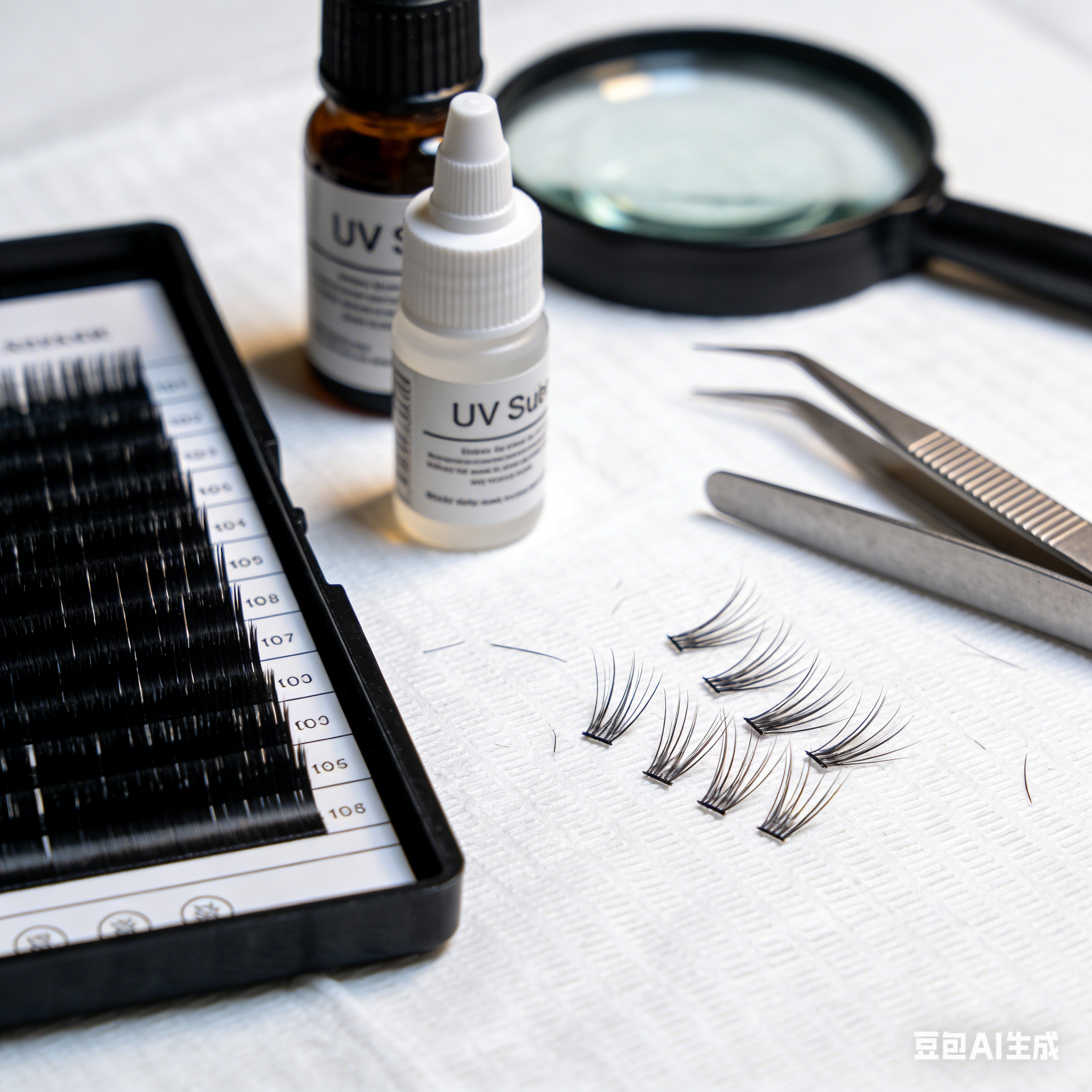
If you’re still troubled by the fact that “UV eyelash extensions fall out quickly,” why not try our UV eyelash extension kit?